The key to success in business often lies in the culture. Many immigrant entrepreneurs are struggling in the U.S. because they lack sufficient understanding of their customers’ hidden motives to drive sales and innovation. Michael Burtov, serial venture-backed founder and the author of Evergreen Startup, a book that helps entrepreneurs raise capital, recently discovered an unusual and innovative approach to consumer behavior in a cup of coffee. He shared his observations in this exclusive article for The Vertical.
As fears of recession grow, venture capitalists (VCs) are adjusting strategies and pushing their limits. More funds than ever claim they are looking to foreign-born founders as sound investments. What’s their reasoning?
Until recently, Central Asia remained a blank spot on the world’s tech map. However, as startup infrastructure develops in the region, increasing numbers of local entrepreneurs are aiming to launch their solutions in the U.S. and globally.
Lunchbox founder Nabeel Alamgir has worked his way up from bussing tables at a fast food chain to being featured on Forbes’s ‘30 Under 30’ list and securing $20 million in VC funding.
Launched in April 2020, the audio-only app Clubhouse now has more than 10 million weekly active users around the world. Its success has led to Twitter introducing Spaces, Spotify launching Greenroom, and Facebook announcing live audio rooms. Despite the Clubhouse boom, few users are aware that one of the app’s co-founders, Rohan Seth, was born in India and raised in its capital city, Delhi.
Joe Duarte, a Portuguese-American entrepreneur with hearing loss, made it his life’s mission to empower those like him. Together with Joseph Lee, a former engineer at Samsung, he developed technology to make phone calls easier for deaf and hard-of-hearing people. During the pandemic, their app, called InnoCaption, saw a record 65 percent growth in active users.
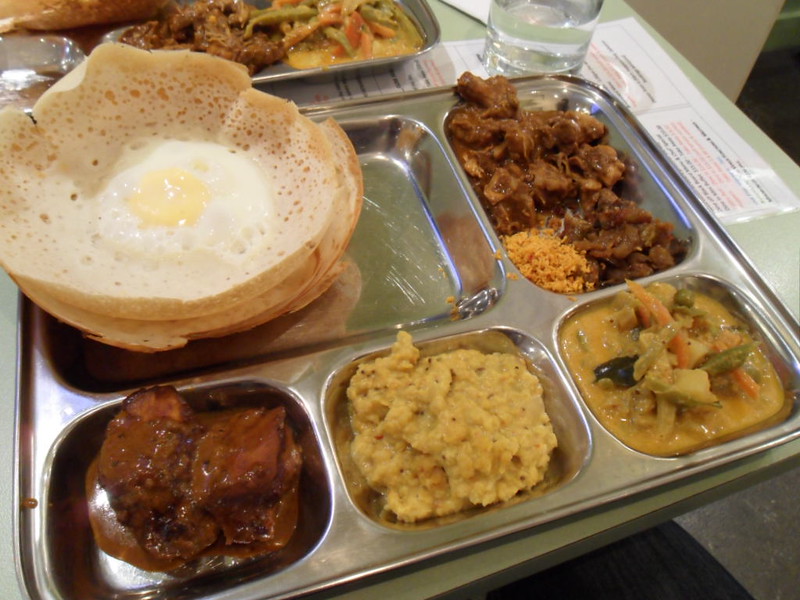
Demand for spices, curry powder, and the taste of home Sri Lankans crave has kept Staten Island’s restaurants and groceries afloat during the pandemic.
Entrepreneurship, especially for women, has traditionally been shunned as “risky” in South Asian culture, but times have changed. A new generation of immigrant women business leaders is rising in the U.S.
Dalits, the lowest caste in the Hindu hierarchy, are victims of thousands of attacks in India each year. In the U.S., Dalit immigrants are escaping discrimination from fellow Indians by creating their own businesses.
With its warm weather, lack of state income tax, and low coronavirus restrictions, Miami is the latest destination for investors and tech executives. Could the city become an alternative to New York and Silicon Valley?
Although 2020 turned out to be a difficult year in many different ways, things could have been worse without technology keeping us connected, masks protecting us from infection and, finally, vaccines that brought us hope. Here are just a few international entrepreneurs helping to improve our lives in the pandemic.
For years, international founders invested heavily in U.S. expansion. Now, New York, one of their top destinations, has been hit hard in the pandemic. How is the city’s global startup ecosystem dealing with the challenges?
U.S. tech companies founded by Belarusians have long been a source of pride for Europe’s last dictator Alexander Lukashenko. Now, as entrepreneurs are challenging his 26-year-old rule, they are feeling the same pressure as everyone else. Silicon Valley startups have also taken a hit.
The COVID-19 pandemic has influenced the traditional ways in which businesses raise investment and acquire new clients. Although tech savvy founders are likely to have adjusted quickly, online communication isn’t always easy. How can you make the most of this time?
The pandemic eliminated 36 percent of immigrant small-business owners, according to reports. Although the Paycheck Protection Program supported some entrepreneurs, most said their experience has been nothing but frustrating.