Tonino Lamborghini is now scouting startups internationally to build a new healthy lifestyle ecosystem. The initiative reflects a broader shift by the luxury brand, which is extending into health, longevity and cognitive optimization.
Tonino Lamborghini plans to create a portfolio that includes smart and holistic fitness equipment, wearable health technologies, home wellness systems, natural and longevity-focused supplements, and healthier beverage options.
Many of these solutions are expected to be embedded directly into Tonino Lamborghini hotels, residences and hospitality projects.
According to Ginevra Lamborghini, who leads the Healthy Lifestyle projects for the group, a new journey started almost a year ago.
“I personally introduced a new business area focused on wellness and improving life in a 360-degree way,” Ginevra Lamborghini told The Vertical in an interview. “It’s about the luxury you are, not just what you own.”
She said the brand’s approach is rooted in the belief that luxury is evolving toward personal performance, mental clarity and physical well-being.
“Your body is the most important machine you can invest in,” Lamborghini said. “That requires attention to detail, knowledge and the right technology.”
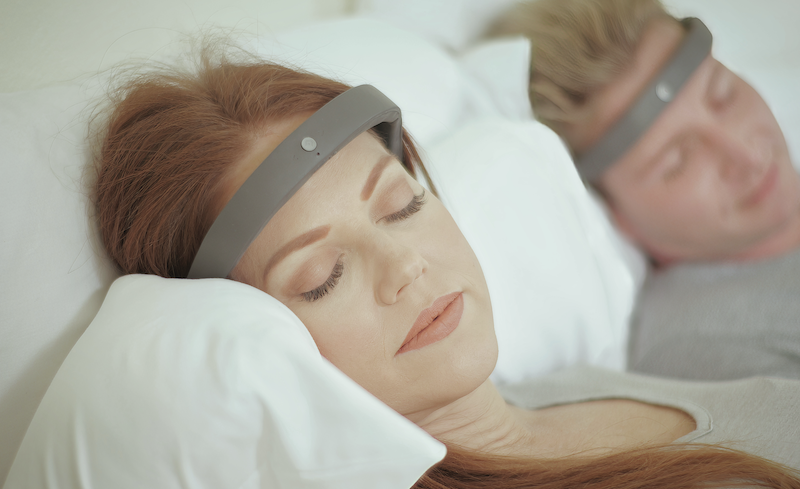
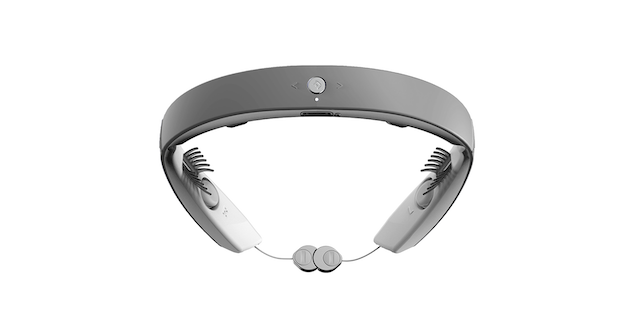
Earable’s wearable uses real-time EEG sensors and AI-driven audio therapy to support sleep. The device personalizes soundscapes and voice coaching based on the user’s brain activity, drawing on cognitive behavioral therapy for insomnia.
The limited SuperBrain Edition developed with Tonino Lamborghini includes an additional daytime focus feature exclusive to the partnership.
“What we built is the first AI-powered wearable that can track brainwaves in real time and personalize audio therapy automatically,” said Kimi Doan, chief innovation officer at Earable Neuroscience. “You press a button to sleep or focus, and the system adapts the sound, frequencies and coaching to how your brain responds.”
Doan said clinical trials involving hundreds of participants showed the technology helped users fall asleep 40% to 70% faster, with sleep-tracking accuracy of about 88% compared with polysomnography, the gold standard used in sleep laboratories.
Earable has won CES Innovation Awards three years in a row, from 2023 to 2025.
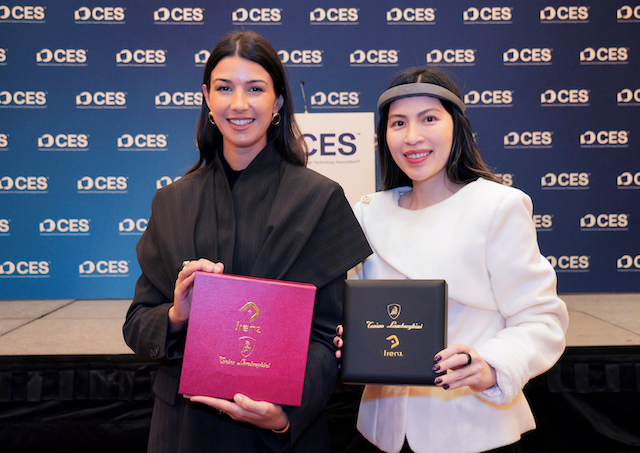
For Tonino Lamborghini, the partnership is part of a much larger vision.
“We are designing dedicated spaces where diagnostics, performance, rejuvenation and community come together,” Lamborghini said. “Today, wellness is fragmented. You go to the gym, you go to the doctor, everything is disconnected. We want to create places where nature, technology and community support a healthier lifestyle.”
She added that the company is actively scouting startups worldwide, with the U.S., UAE and Asia seen as key luxury markets.
“When we partner with companies like Earable, they lead on technology and distribution, while we help connect them to new networks and elevate the product through design, performance and features,” Lamborghini said.
Doan said Earable has received many partnership requests over the years but that the collaboration with Tonino Lamborghini came at the right moment.
“They discovered us when we had just launched our focus feature,” she said. “Sleep and recovery are essential, but performance during the day matters just as much. That combination aligned perfectly with the Lamborghini philosophy.”