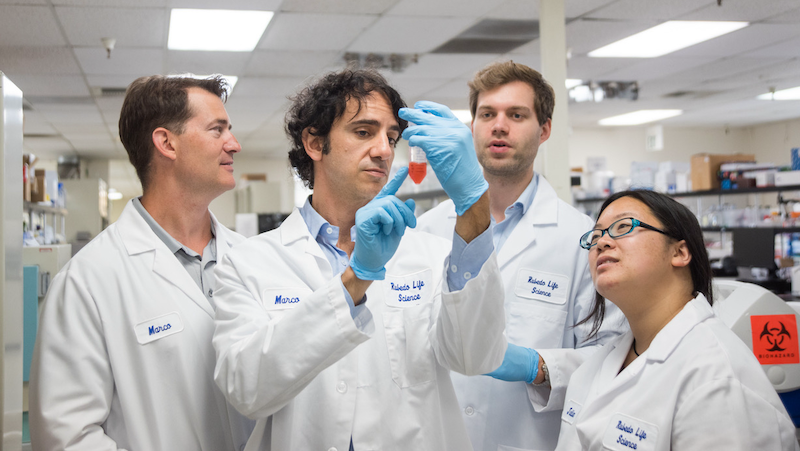
Rubedo Life Sciences is an AI-driven Silicon Valley biotech founded by Italian researcher Marco Quarta. Today, the startup is one of the most advanced players in longevity biotech, a field focused on developing drugs that slow, and potentially reverse, biological aging.
The company has raised over $70 million across multiple funding rounds, with Khosla Ventures among the lead investors. Other backers include CDP VC, an Italian sovereign fund, and the Hevolution Foundation, a Saudi non-profit focused on longevity science.
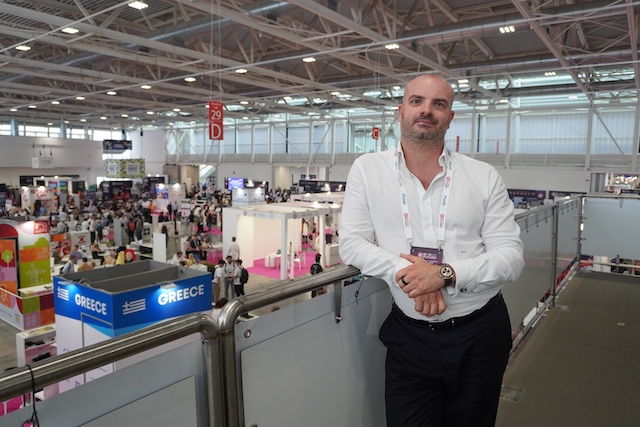
Rubedo’s COO, Marco Dotto, took the stage in June at We Make Future (WMF) in Bologna, one of the largest innovation fairs in Europe, which brought together more than 800 exhibitors and 3,000 startups from around the world. He told The Vertical why a journey like this would not have been possible anywhere other than the U.S.
Born in Italy, built in Silicon Valley
“I doubt investors would have backed us if the company had been based in Italy,” Marco Dotto, COO of Rubedo Life Sciences, told The Vertical. The company is currently focused on a specific molecular mechanism of aging: senescent cells, the so-called “zombie cells” that accumulate with age and drive chronic disease.
Rubedo’s lead drug candidate, RLS-1496, was designed to selectively eliminate senescent cells, slowing biological aging. It has been tested on patients with actinic keratosis, a common age-related condition that causes precancerous skin lesions, as well as on patients with atopic dermatitis and psoriasis.
The drug, developed through Rubedo’s proprietary AI-driven discovery platform ALEMBIC™, has just completed its Phase 1b/2a trial, an early stage of clinical development, and is now moving toward further clinical studies.
In his talk at We Make Future, Marco Dotto explained how a biotech pipeline is built from lab to market, and the role longevity science companies play in that process.
Rubedo shows how the future of drug development is being shaped in Silicon Valley, while still rooted in Italy.
The startup was born from the scientific and entrepreneurial vision of Marco Quarta, who co-founded the company alongside Mark Gallop. Quarta moved to the U.S. after studying in Padua and Bologna. He taught at Stanford and became one of the world’s leading experts on cellular aging. That’s how he came to found Rubedo, in the heart of Silicon Valley.
“Building a startup in Silicon Valley has more advantages than disadvantages,” Rubedo’s COO Marco Dotto told The Vertical.
“The main disadvantage is the cost of personnel: a lab technician costs three to five times more than in Italy. On the other hand, you get access to a completely different kind of capital, and to employees with a far more entrepreneurial mindset. There’s also less bureaucracy, more technology, and a mindset for scale that’s there from day one.”
Rubedo has also attracted heavyweight leadership. CEO Frederick Beddingfield, a physician-scientist and serial biotech entrepreneur, helped Allergan build Botox into a multibillion-dollar franchise and brings experience spanning biotech IPOs and billion-dollar deals.
The Italian talent behind the company
Marco Dotto is also one of Rubedo’s investors — and before that, a serial entrepreneur with four companies founded, and an investment portfolio spanning Italy and the U.S.
He studied in Padua, won a scholarship for a master’s degree in San Diego, completed an MBA in Italy, and worked at a university spin-off in genomics. Then he started building businesses on both sides of the Atlantic.
It’s from this dual position — founder and investor — that Dotto tells Rubedo’s story: yet another example of how foreign talent finds in the U.S. the conditions to build what would be difficult to achieve in Europe. The difference, he explains, isn’t just about capital. It’s also about mindset.
“In Silicon Valley, founders, and even part of the workforce, want to build a company worth billions of dollars,” Dotto says.
“In Italy, 99% of entrepreneurs think on a smaller scale. In Silicon Valley, that ambition is almost part of the DNA because you’re surrounded by examples of people who’ve done it. If you have a strong idea, investors are willing to take a chance on you, even if you’re from abroad. America was built as a melting pot, so people tend to care less about where you come from than they do in many other countries.”
Silicon Valley: The destination of choice
Rubedo’s case is not isolated. It reflects a broader pattern that scientists and investors have been tracking for years, and one that goes beyond biotech.
“For talented people working in deep tech, the U.S. is the destination of choice,” Giorgio Metta, Scientific Director of the Italian Institute of Technology (IIT), told The Vertical.
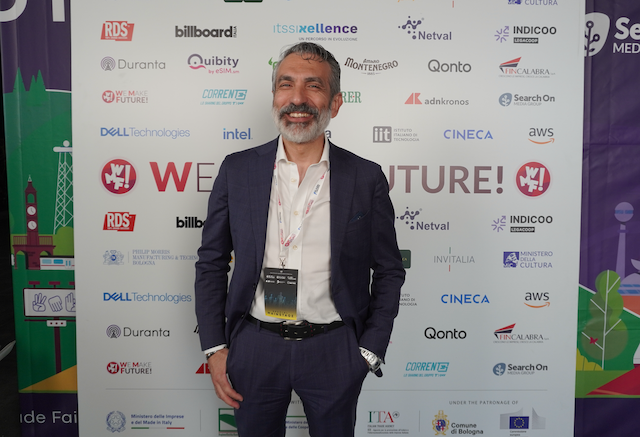
IIT is one of Europe’s most advanced research centers, with several active projects in the U.S. Metta spoke at WMF in a session dedicated to the integration of AI and robotics in the healthcare of the future. “The financial opportunities here can be on an entirely different level compared to Europe.”
This view is also shared by Alberto Sangiovanni Vincentelli, an Italian professor at UC Berkeley and co-founder of Cadence and Synopsys, two U.S. companies that transformed the global semiconductor industry.
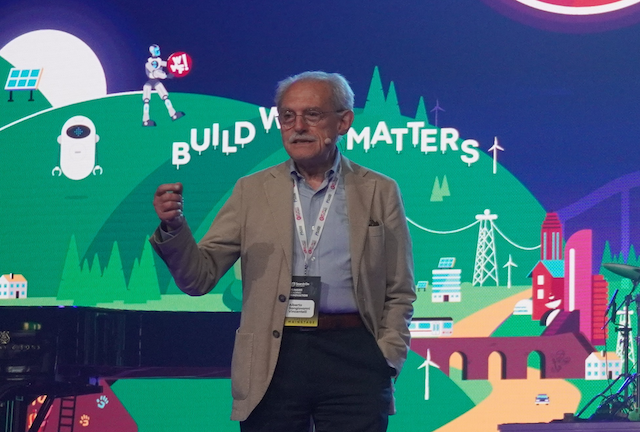
Vincentelli arrived in the U.S. in the 1970s, and sums up the phenomenon this way: “When it comes to building a company, there are very few places where you can do it optimally, and Silicon Valley is number one,” Vincentelli told The Vertical.
“The key is the ecosystem: top universities, venture capital, and an entrepreneurial culture you learn by watching it in action. Talent is equally distributed around the world. If you draw on foreign talent as well as your own, you’ve got the best cards to play. That’s exactly what happens in Silicon Valley.”
It’s exactly in this context that the longevity biotech sector is growing. Far from the spotlight, but moving at a pace we’ve seen before: “It’s like talking about AI before ChatGPT,” Marco Dotto told The Vertical.
“Ten years ago, the companies building AI were already there, the science was advancing, but the world hadn’t noticed yet. Until you have a product on the market, nobody realizes what’s quietly building up in the background.”
The comparison isn’t accidental: longevity biotech is today roughly where AI was a few years ago — a niche sector, funded by a handful of visionaries, on the verge of a major shift.
And the shift, when it comes, could be just as dramatic. As Dotto puts it: “Aging affects everyone. We’re talking about nearly eight billion people.”
The sector doesn’t yet have a single approved drug. But the most advanced companies, Rubedo among them, are accumulating scientific evidence that healthy longevity is a concrete possibility for humanity.
The coming months will be pivotal: a Phase 2B clinical trial is set to begin in the fourth quarter of 2026. “If the upcoming studies succeed, we will have shown, for the first time in history, that a molecule can truly rejuvenate skin, not just make it softer or more elastic, but bring the cells back to a molecular profile from decades earlier,” Dotto says.
“And this is just the beginning: the company’s goal is to develop drugs that do the same thing for organs and tissues throughout the body.”