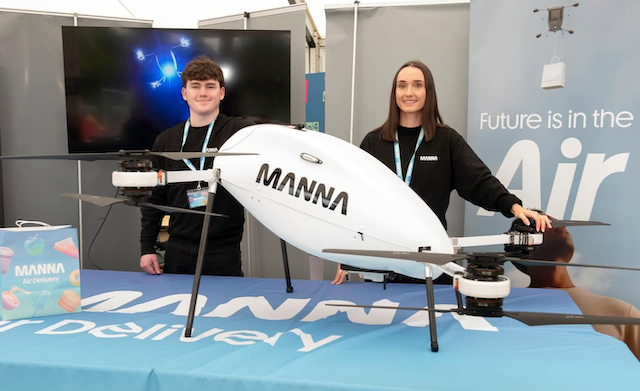
Dublin-headquartered Manna plans to begin commercial deliveries through partnerships with DoorDash, McDonald’s, and Uber Eats within the next two months. By mid-2027, the startup expects to operate 40 drone delivery hubs across Tulsa, with the goal of making drone delivery available to 90% of the city’s residents.
According to Manna Executive Chairman Kenny Jacobs, former CEO of Dublin Airport and former Ryanair executive, Oklahoma, Texas and neighboring states will be the battleground for scaling up and providing drone delivery globally
Backed by $110 million in funding
The U.S. launch follows Manna’s $50 million Series B financing announced in April, bringing the company’s total funding to approximately $110 million. The round was led by ARK Invest and Schooner Capital, with participation from the Ireland Strategic Investment Fund, Molten Ventures, Enterprise Ireland, Coca-Cola HBC, and Tapestry.
The funding reflected growing investor confidence in autonomous logistics despite a challenging venture market. ARK Invest, known for backing companies such as OpenAI, SpaceX, Tesla, and Anthropic, described drone delivery as an emerging infrastructure opportunity.
From Ireland to the U.S.
Founded by entrepreneur Bobby Healy, Manna has completed more than 300,000 commercial drone deliveries, primarily in Ireland, making it one of Europe’s most active drone delivery operators. The company says its drones can deliver food and everyday essentials in just a few minutes while producing significantly lower emissions than traditional road delivery.
However, Manna’s home market has presented challenges. The company recently paused Irish operations, citing the lack of clear national planning regulations, and has increasingly shifted its focus toward international expansion. Reuters reports that executives expect a more favorable regulatory environment in the U.S., where the company believes it can scale more rapidly.
Entering a crowded drone delivery race
The U.S. expansion places Manna in direct competition with some of the world’s best-funded drone delivery companies, including Zipline, Wing (owned by Alphabet), and Amazon Prime Air. Unlike many competitors still focused on pilot programs, Manna argues that the core technology has already been proven and that the next phase is demonstrating commercial scalability.
According to Jacobs, one advantage is cost efficiency: each operational base requires only about the space of four parking spots, allowing the company to expand rapidly with relatively low capital expenditure.